A YouTube video studio on autopilot
Topic → script → voiceover → visuals → editing → thumbnail → publishing. One Windows app instead of five services and late nights in an editor.
From idea to upload — no editing app
The radar finds videos that took off on small channels in your niche.
Claude, ChatGPT, and Gemini argue until the script scores 9/10. Hooks follow proven retention formulas.
ElevenLabs or a free voice, word-by-word Whisper check, the same character in every shot.
Camera motion, music that ducks under the voice, −16 LUFS, 24 subtitle styles, chapters.
Thumbnails modeled on viral examples, the best title, scheduled publishing via the YouTube API.
Everything you pay an editor and five services for
One button: topics, videos, thumbnails, titles, scheduled uploads, and Shorts in between.
The style comes from viral videos on the topic. Each thumbnail gets a CTR score, and weak ones are redone.
After upload, variants rotate once a day, and the real impression CTR from YouTube picks the winner.
Audio, black frames, placeholders, subtitle typos, and chapters — caught before viewers see them.
Retention and stats feed the radar and future scripts, so hooks keep getting stronger.
The best moments become Shorts; English and Spanish versions go to separate channels.
Draft replies in your channel's voice, spam sorted out. Only what you approve gets posted.
Keys and passwords are encrypted on your PC. Publishing goes through the official YouTube API, like major services use.
The app checks for new versions on its own; fixes for website changes apply without reinstalling.
Thumbnails modeled on viral examples
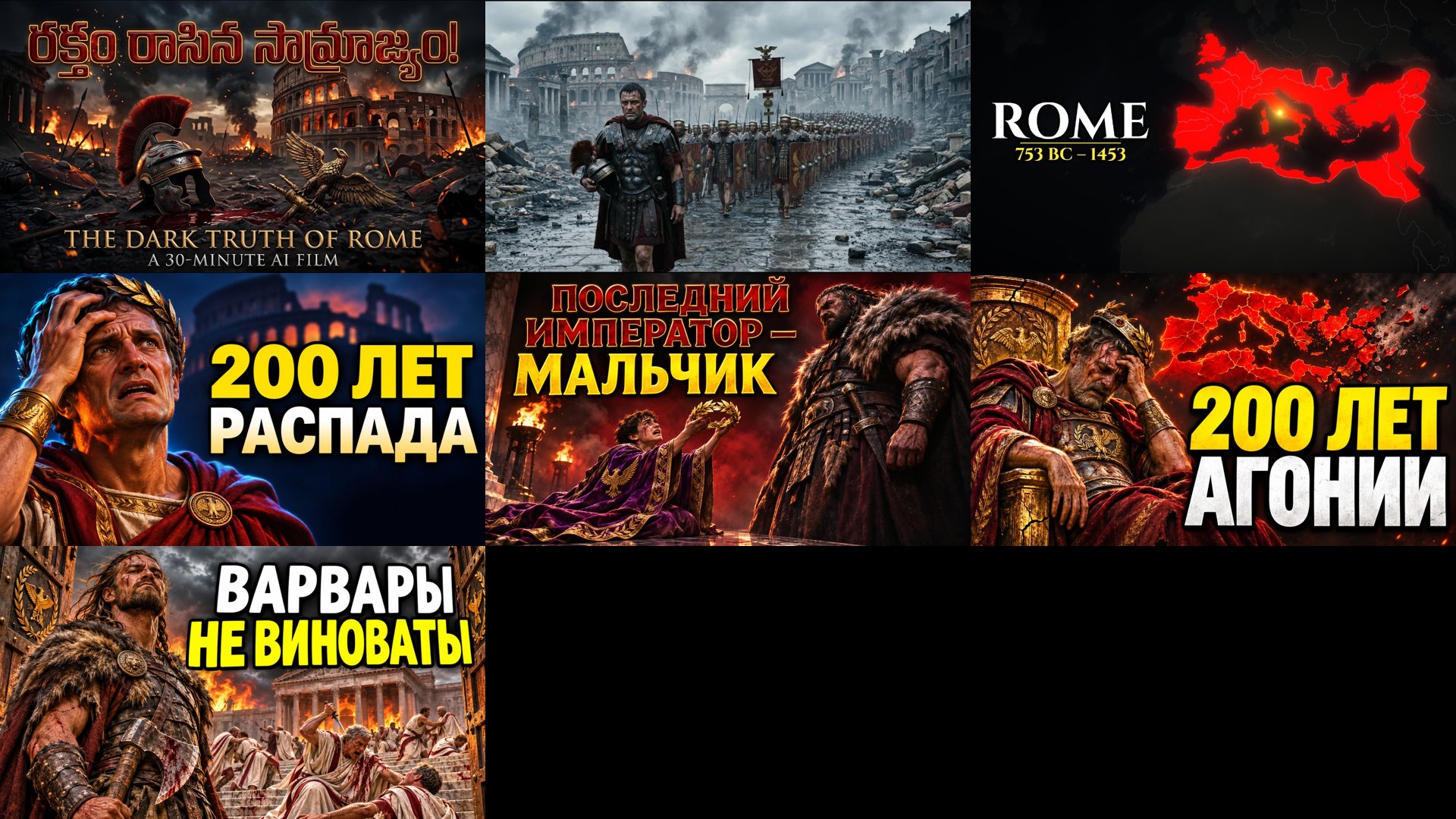
- Examples: videos on the topic that got 10–40 times more views than the channel has subscribers.
- Text: built on formulas — intrigue, stakes, conflict. “200 YEARS OF AGONY” instead of “History of Rome.”
- Scoring: 9 criteria used by top US channels, from focus to thumbnail honesty.
- Result: the best one becomes the cover; the rest go into an A/B test after upload.
Everything to grow your channel — in one app
- Every step from topic to publishing
- One channel
- Thumbnails with CTR scores
- YouTube and Instagram via official APIs
- Autopilot, A/B tests, translations, comments
- Everything in Basic
- Unlimited channels
- A week on autopilot
- Thumbnail A/B tests by real CTR
- Translations for other languages and channels
- Comment replies
Frequently asked questions
What do I need to run it?
Windows 10/11 and a Claude subscription (Claude Code). Optional: ChatGPT (Codex), a Google account for AI Studio/Flow, ElevenLabs. The app installs everything else on first launch.
Will my channel get banned?
Publishing goes through the official YouTube Data API in your own Google Cloud project, the same way major services do it. No one can rule out risk entirely, so follow YouTube's content policies. Browser automation is kept only as an experimental feature.
How much does generation cost?
KADR uses your own subscriptions: Claude, ChatGPT, Google AI. There's also a free mode with Wikimedia images, a free voice, and Mixkit music.
Windows says “Unknown publisher”
Click “More info” → “Run anyway.”
Can I use it on two computers?
A key is tied to one computer. A second computer needs a second key.